
AI Hallucinations Are More Dangerous Than You Think
AI hallucinations — when models produce incorrect or fabricated content that appears real — pose serious risks across industries. Here is what causes them and how to mitigate them.
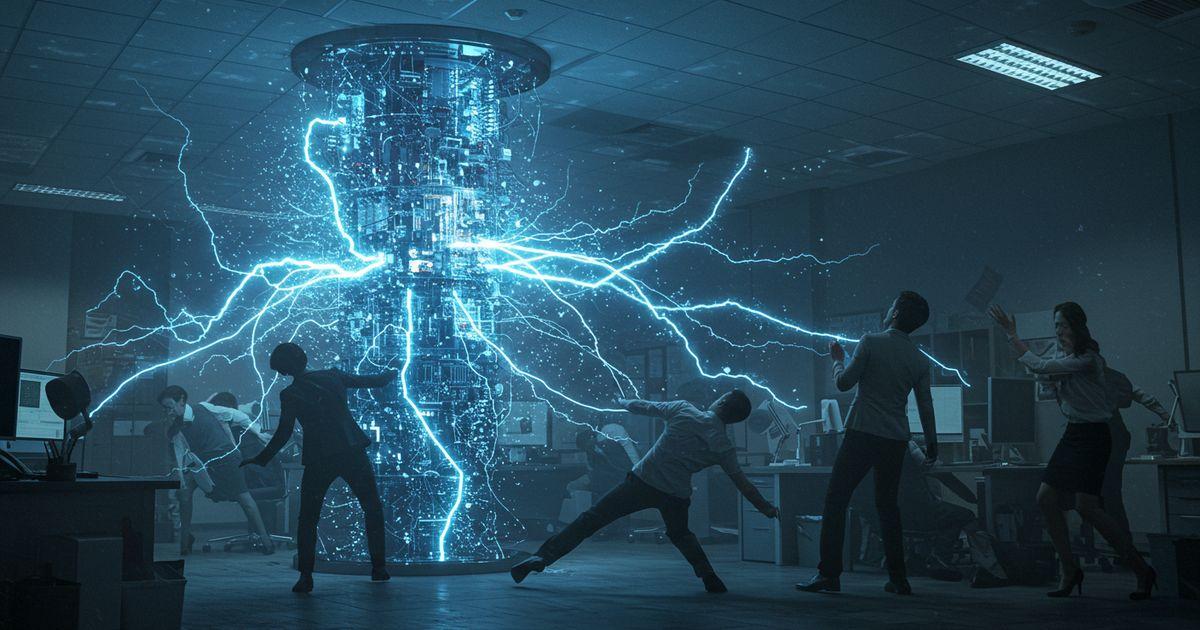
The Hidden Risk in Every AI Deployment
AI hallucinations occur when a model produces incorrect, misleading, or entirely fabricated content that appears real. This is not a minor inconvenience — it is a fundamental reliability problem that affects every organization deploying AI in production.
When an AI system confidently presents false information as fact, the consequences range from embarrassing to catastrophic depending on the domain. In healthcare, a hallucinated drug interaction could endanger patients. In legal research, a fabricated case citation could result in court sanctions. In defense, a hallucinated intelligence assessment could inform faulty operational decisions.
Understanding what causes hallucinations — and how to mitigate them — is not optional for organizations that take AI seriously.
Why AI Hallucinations Happen
Four primary factors drive AI hallucination:
1. Insufficient Training Data
When models encounter queries outside their training distribution, they do not say "I don't know." They generate plausible-sounding responses based on statistical patterns — effectively guessing while sounding confident. The less comprehensive the training data, the more frequently this occurs.
2. Vague or Ambiguous Prompts
Imprecise inputs produce imprecise outputs. When a prompt can be interpreted in multiple ways, the model selects the interpretation that best matches its statistical patterns — which may not align with the user's intent. This is a user-side problem with a system-side impact.
3. Inherited Biases
Training datasets reflect the biases present in their source material. When a model learns from biased data, it reproduces and sometimes amplifies those biases in its outputs. This is not hallucination in the traditional sense but produces similarly unreliable results.
4. Prediction Mechanics
Large language models work by predicting the most likely next token in a sequence. This mechanism prioritizes statistical likelihood over factual accuracy. A statement can be statistically probable — based on patterns in the training data — without being true.
Real-World Failures
The consequences of AI hallucination are not theoretical:
Each of these incidents eroded trust in AI systems and caused real organizational harm.
A Framework for Mitigation
Eliminating hallucinations entirely is not currently possible. Reducing their frequency and impact requires a systematic approach:
The Bottom Line
AI hallucinations are not a bug that will be patched in the next release. They are an inherent characteristic of current AI architectures that must be managed through robust engineering practices, human oversight, and organizational processes.
Organizations that deploy AI without accounting for hallucination risk are building on an unstable foundation. Those that build hallucination mitigation into their AI strategy from day one will deliver more reliable results and maintain the trust of their stakeholders.
Learn how The AI Cowboys builds reliable AI systems or contact us to discuss AI risk management for your organization.