
Microsoft's Majorana 1: A Quantum Computing Breakthrough
Microsoft unveiled Majorana 1, a quantum chip with Topological Core architecture targeting one million qubits. Here is what it means for enterprise computing, healthcare, and defense.
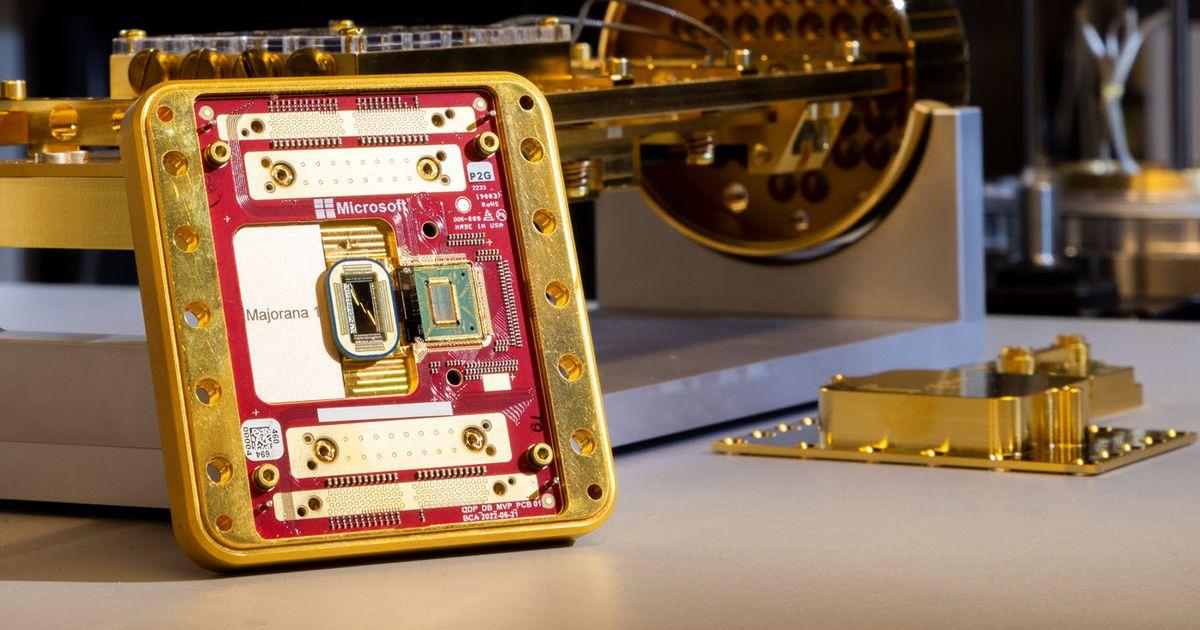
The Transistor of the Quantum Era
Microsoft has unveiled Majorana 1, a quantum chip featuring a Topological Core architecture designed to eventually support one million qubits in a compact, handheld form factor. CEO Michael Pendleton of The AI Cowboys characterizes this as "inventing the transistor of the quantum era."
That comparison is not hyperbole. Just as the transistor enabled the entire digital computing revolution, topological qubits could enable quantum computing to move from laboratory curiosity to industrial utility.
Three Key Innovations
1. Topological Qubits
Majorana 1 leverages exotic Majorana particles to create qubits that are inherently more stable than current approaches. Topological qubits experience lower hardware-level error rates, reducing the massive overhead currently required for quantum error correction.
This matters because error correction is the primary bottleneck preventing quantum computers from tackling real-world problems. Reduce the error rate, and you reduce the number of physical qubits needed for each logical qubit — dramatically.
2. Scalability
The architecture targets one million qubits for large-scale computational challenges. Current quantum systems operate in the hundreds of qubits. The jump to one million is not incremental — it is the threshold at which quantum computers can simulate complex chemical reactions, optimize global logistics networks, and break current encryption standards.
3. Digital Control
Perhaps most practically significant: Majorana 1 enables qubits to function like light switches — discrete on/off states — rather than requiring the constant analog fine-tuning that makes current quantum systems fragile and expensive to operate. Digital control means quantum computers can eventually be managed by standard engineering teams, not exclusively by PhD physicists.
Practical Applications
The breakthrough enables solutions that are currently beyond the reach of classical computing:
Sustainability
Quantum simulation can design self-healing construction materials and eco-friendly plastics by modeling molecular interactions at a level of detail that classical computers cannot achieve. These are problems where better materials translate directly to reduced environmental impact.Healthcare and Agriculture
Accelerating enzyme discovery and drug development through quantum chemistry simulation. Improving crop yields by modeling complex biological systems. These applications could deliver measurable outcomes within the current decade.Industrial Optimization
Enhancing AI forecasting, supply chain management, and aerospace/automotive design simulation. Quantum optimization algorithms can find solutions to logistics and scheduling problems that classical computers can only approximate.What This Means for Enterprise
The shift Microsoft is signaling is fundamental: quantum computing is moving from "within decades" to "within years" for practical enterprise applications. Organizations that begin building quantum literacy and identifying quantum-suitable use cases now will be positioned to move first when the hardware reaches commercial maturity.
Those that wait will find themselves scrambling to catch up in a technology domain where early movers have a compounding advantage.
Explore our quantum computing consulting practice or contact The AI Cowboys to discuss quantum readiness for your organization.