
More Similar Than We Thought: How AI and the Human Brain Process Information
MIT researchers discovered that large language models process information through a central semantic hub — mirroring how the human brain integrates inputs from different senses.
A Surprising Discovery
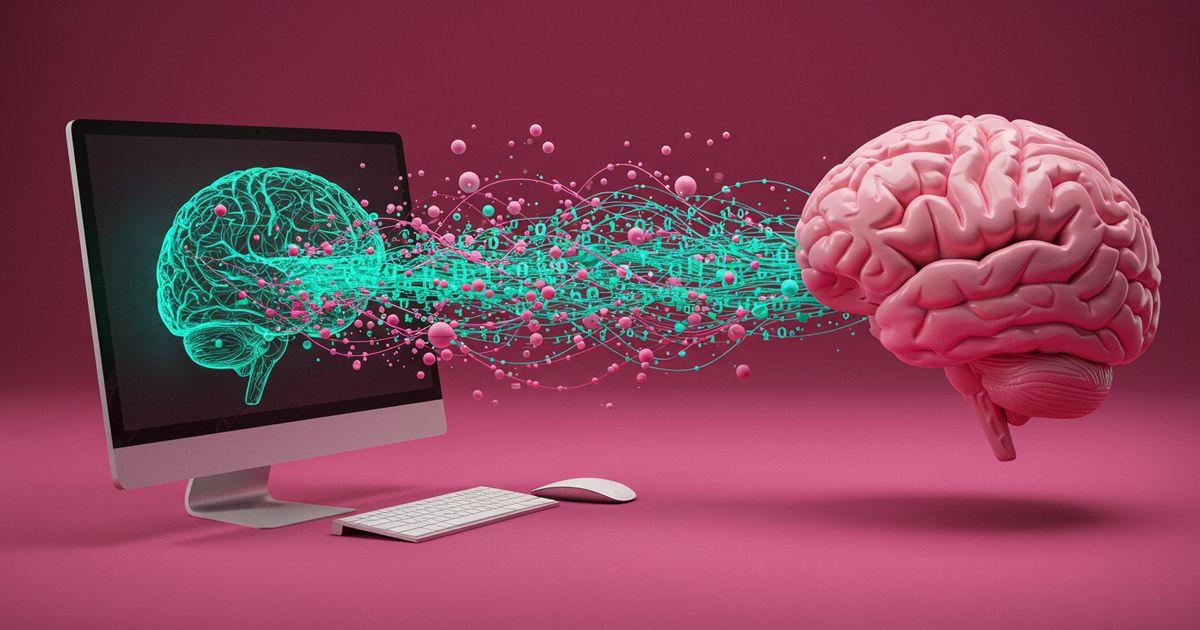
MIT researchers have made a discovery that reframes how we understand artificial intelligence: large language models process diverse information through a central semantic hub, mirroring how the human brain integrates inputs from different senses.
This is not a metaphor. The structural parallel is measurable and significant.
How LLMs Actually Process Information
The research reveals that LLMs convert all data — whether text, images, or code — into a shared internal representation, typically using their dominant language as the common format.
An English-trained model processing Chinese text will internally translate that content into English-like representations before reasoning about it, even if the final output is generated in the original language. This mirrors how the human brain routes visual, auditory, and tactile inputs through shared processing centers before generating responses.
The implication: the architectures we have built for AI are converging with the architectures that evolution built for biological intelligence. This was not by design — it emerged from optimization pressure.
Business Applications
This discovery has practical implications across industries:
Multilingual Operations
If LLMs naturally route through a shared semantic representation, multilingual translation systems can be made more seamless by leveraging — rather than fighting — this internal architecture. Organizations operating across language boundaries benefit directly.
Multimodal AI
Business applications that need to process text, images, audio, and structured data simultaneously can be built more efficiently when we understand how models naturally integrate these inputs. The semantic hub provides a natural integration point.
Customer-Facing AI
AI systems deployed in customer service, financial advising, and legal support become more capable when their multimodal processing is understood and optimized. Better understanding of internal representations leads to more reliable outputs.
The Quantum Computing Connection
Michael Pendleton, CEO of The AI Cowboys, sees this research as pivotal for quantum computing integration:
Enhanced reasoning: Understanding how AI organizes knowledge across data types enables more efficient and explainable systems. When you know how the semantic hub works, you can build better ones.
Quantum synergy: Advanced quantum computers could enhance semantic hub processing beyond what classical computing allows. The mathematical operations that underpin these shared representations are well-suited to quantum acceleration.
Multimodal decision-making: Healthcare, cybersecurity, and financial services all require AI systems that can analyze multiple data sources simultaneously. The semantic hub architecture provides a blueprint for building these systems more effectively.
What This Means for Enterprise AI
The convergence between artificial and biological intelligence processing is more than an academic curiosity. It provides a roadmap for building AI systems that are more capable, more reliable, and more aligned with how humans actually think and reason.
Organizations investing in AI should pay attention to this research. The companies that build their AI strategies around these insights will have a structural advantage over those that treat AI as a black box.
Explore how The AI Cowboys applies cutting-edge AI research to real-world problems or contact our team to discuss your AI strategy.