
Neuromorphic Brain Chip in NVIDIA Jetson: How the AI Cowboys Are Rewiring AI from San Antonio
The AI Cowboys tested a hybrid NVIDIA Jetson Orin AGX + BrainChip Akida system at UT San Antonio, achieving a 90% reduction in energy consumption for AI workloads. Here is what neuromorphic computing means for edge AI.
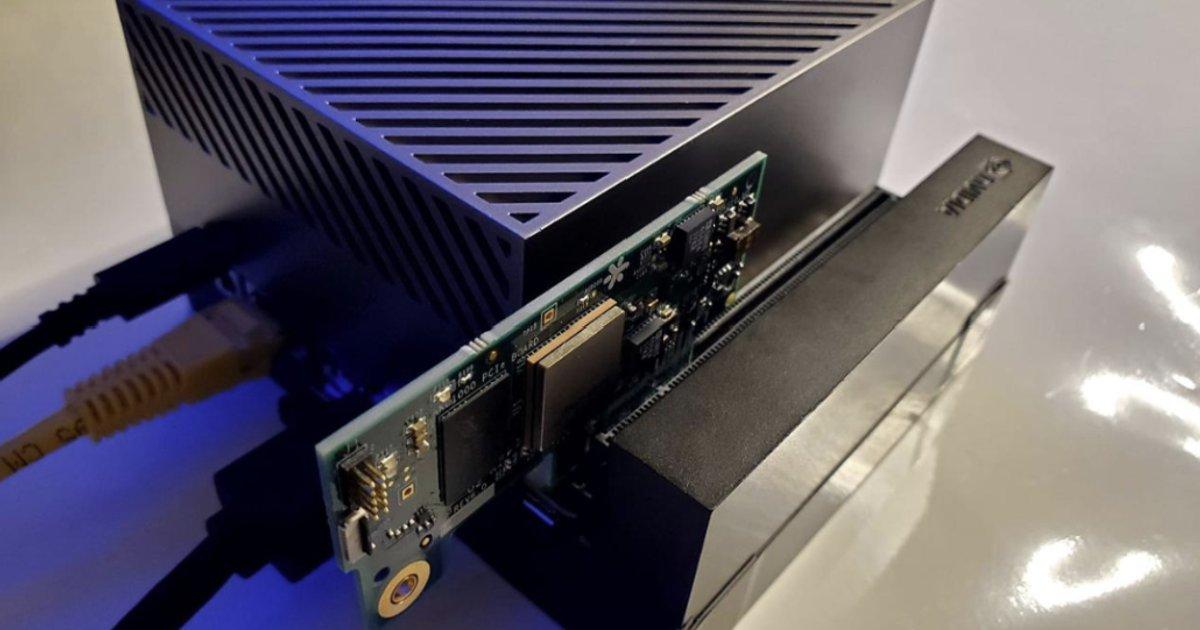
Artificial intelligence has always been powerful — but also power-hungry. Today, AI systems consume about 2% of the world's total electricity — as much as some entire nations. That is unsustainable as AI adoption continues to skyrocket. But what if AI could think like the human brain, firing only when it needs to, instead of chewing through power nonstop?
That is the promise of neuromorphic computing — and the AI Cowboys are making it real inside an NVIDIA Jetson Orin AGX at our UTSA AI Lab in San Antonio.
What Is Neuromorphic Computing? (The Brain in Silicon)
Traditional chips act like calculators on overdrive. They are always running, constantly consuming power, even when idle. Neuromorphic chips flip the model. Inspired by biology, they only activate when signals arrive, just like neurons in your brain.
This is achieved through Spiking Neural Networks (SNNs). Instead of continuous number-crunching, SNNs transmit short bursts — "spikes" — of information, dramatically reducing energy use while enabling brain-like pattern recognition.
In short: neuromorphic computing = a brain in silicon.
Case Study: Jetson + Akida vs. Conventional AI
At the National Security Collaboration Center inside UT San Antonio's San Pedro I building, the AI Cowboys tested a hybrid system combining the NVIDIA Jetson Orin AGX with a BrainChip Akida PCIe Board.
That is a 90% reduction in energy. To put it in perspective, that is like shutting off 1,000 household lightbulbs every single hour.
Sustainability
If deployed globally, neuromorphic AI could reduce energy consumption enough to eliminate CO2 emissions equivalent to those of millions of cars. It is not just green tech — it is survival tech for industries under ESG pressure.
Accessibility
Because these systems consume minimal power, they can operate in off-grid or low-infrastructure regions. That means farmers monitoring crops, doctors using portable diagnostic kits, or disaster teams running autonomous drones — all without relying on cloud data centers or stable electricity.
The Road Ahead: 2025 and Beyond
The neuromorphic computing market is projected to grow from $500 million in 2024 to over $15 billion by 2035. And the race is heating up:
Challenges to Overcome
For pioneers, those are not roadblocks — they are opportunities.
Getting Started: Tools You Can Use Today
This is not locked up in defense labs or mega-corporations. It is available to you right now.
Thinking Different About Thinking Machines
The AI Cowboys believe the shift from brute-force calculation to brain-inspired elegance will redefine AI at the edge. In permissive environments, it enables sustainable, privacy-preserving intelligence. In non-permissive environments, it allows capabilities that the cloud cannot deliver — autonomous systems, secure intelligence, and resilient performance at the edge of human exploration.
Want to see it in action? Visit the AI Cowboys Lab at UT San Antonio's San Pedro I. As part of the NSCC Mission Partner ecosystem, we are always building what comes next.
The question is not whether neuromorphic computing will transform AI — it is whether you will be ready when it does.
Explore our AI solutions or contact us to learn how neuromorphic computing fits into your technology strategy.